My translations of non-fiction books by top Israeli writers and scholars are published by leading trade and university presses. I don’t deal with Japanese translations because they are not my forte. Article translations on a wide range of subjects have appeared in major academic journals and general periodicals such as The New Yorker and The New York Times.
 See my Zoom talk on translation with Akin Ajayi of The Tel Aviv Review of Books for the National Library of Israel.
TRANSLATING IN NABOKOV’S SHADOW: SOME THOUGHTS ON TRANSLATING NON-FICTION
 In the preface to the English translation of his novel Invitation to a Beheading– translated by the author’s son under the direction of the author himself – Vladimir Nabokov states unambiguously that a translator’s faithfulness to his author is a supreme obligation even if the product is ludicrous: continued …
Haim’s translations of Hebrew short fiction
“Heirs” by Amos Oz, The New Yorker, Jan. 22, 2007.
“Next to the Traffic Signal, Under the Streetlight,” by Nurit Kotler, Zeek, Summer 2010
Haim publishes occasional poetry translations from the Hebrew here on SoJo:
“North of Boston” by Shahar Bram
“My Wife Watches Me” by Giora Fisher
SELECTED PUBLISHED BOOK TRANSLATIONS
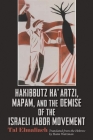 Tal Elmaliach, Hakibbutz Ha’artzi, Mapam, and the Demise of the Israeli Labor Movement, Syracuse University Press, 2019

 Nir Kedar, Law and Identity in Israel: A Century of Debate, Cambridge University Press, 2019
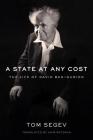 Tom Segev, A State at Any Cost: The Life of David Ben-Gurion, Farrar, Straus & Giroux, 2019
 Eli Yassif, The Legend of Safed: Life and Fantasy in the City of Kabbalah, Wayne State University Press, 2019
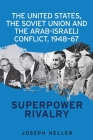
Joseph Heller, The United States, the Soviet Union and the Arab-Israeli conflict, 1948-67: Superpower Rivalry, Manchester University Press, 2018
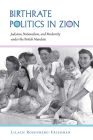
Lilach Rosenberg-Friedman, Birthrate Politics in Zion: Judaism, Nationalism, and Modernity under the British Mandate, Indiana University Press, 2017
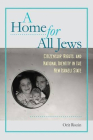
Orit Rozin, A Home for All Jews: Citizenship, Rights, and National Identity in the New Israeli State, Brandeis, 2016

Margalit Shilo, Girls of Liberty: The Struggle for Suffrage in Mandatory Palestine, Brandeis, 2016
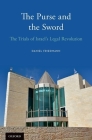
Daniel Friedmann, The Purse and the Sword: The Trials of Israel’s Legal Revolution, Oxford University Press, 2016
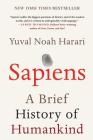 Yuval Noah Harari, Sapiens: A Brief History of Humankind, Harper, 2015 (editor)
Hillel Cohen, Year Zero of the Israel-Arab Conflict, Brandeis University Press, 2015


Itamar Radai, Palestinians in Jerusalem and Jaffa, 1948, Routledge Studies in the Arab-Israeli Conflict, 2015


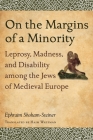 Ephraim Shoham-Steiner,
On the Margins of a Minority: Leprosy, Madness, and Disability among the Jews of Medieval Europe, Wayne State University Press, 2014
Shlomo Avineri, Herzl: Theodor Herzl and the Foundation of the Jewish State, Weidenfeld & Nicolson, 2013
Not yet available on Indiebound.



Eran Rolnik, Freud in Zion: Psychoanalysis and the Making of Modern Jewish Identity, Routledge, 2012


Orit Rozin, The Rise of the Individual in 1950s Israel: A Challenge to Collectivism, The Schusterman Series in Israel Studies, Brandeis, 2011.


David Grossman, Death as a Way of Life: From Oslo to the Geneva Accord , Picador, 2004.


Igal Sarna, The Man Who Fell Into a Puddle: Israeli Lives, Vintage, 2004.


<
Tom Segev , Elvis in Jerusalem: Post-Zionism and the Americanization of Israel, Picador, 2002.


Not available on Indiebound.


